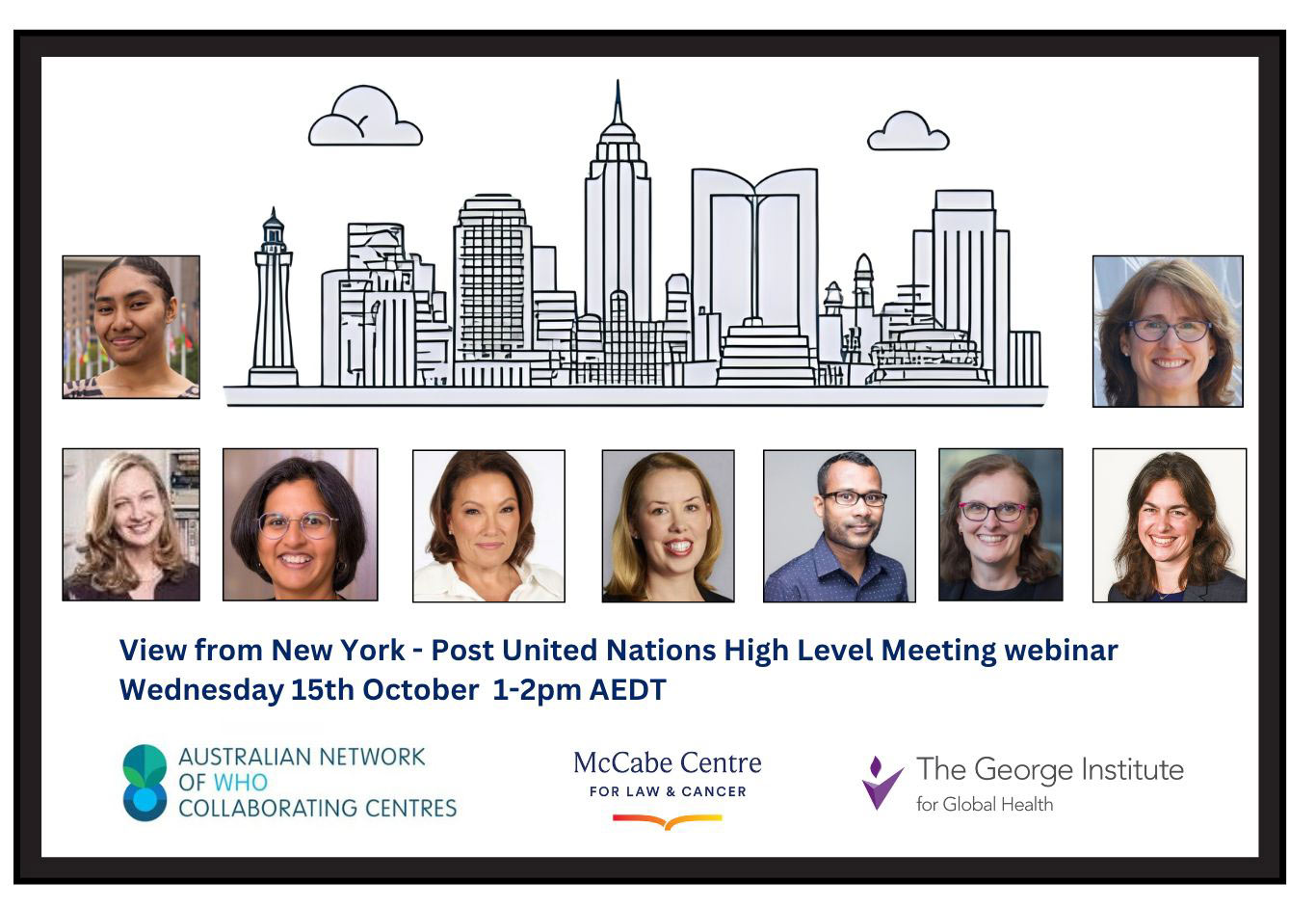
View from New York – Post United Nations High Level Meeting webinar
We joined forces with some incredible Indopacific health leaders and over 120 participants from across Australia and globally for a timely and powerful webinar: “How do we turn global promises on NCDs and mental health into real change in our region?”
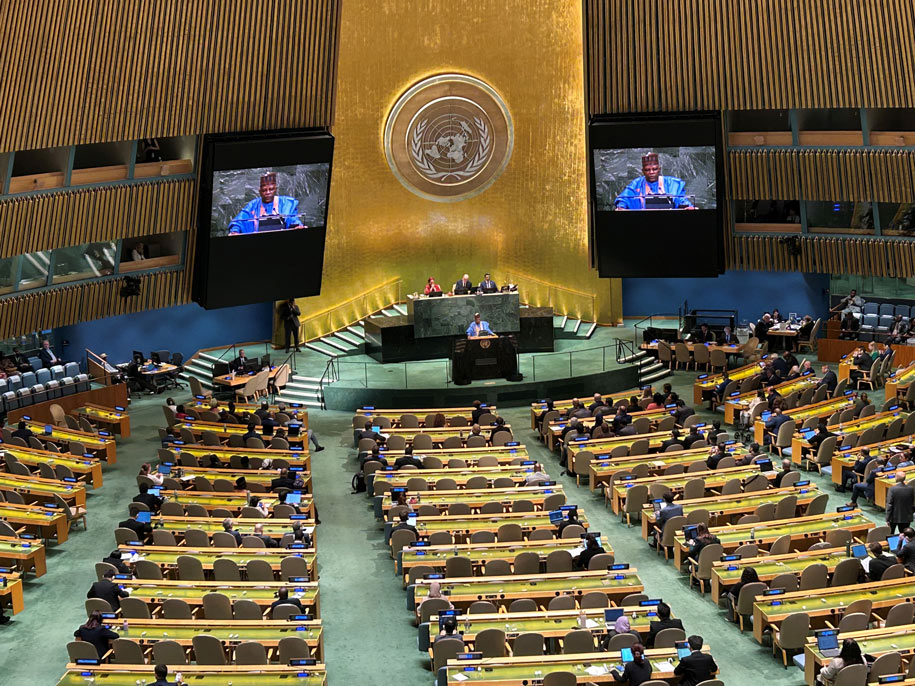
Following the 2025 UN High-Level Meeting on Noncommunicable Diseases (NCDs) and Mental Health, this event provided a platform to reflect on the opportunities of the Political Declaration and explore how we can translate global commitments into tangible action for our communities.
Together, the speakers reflected on attending the UN General Assembly and UN High-Level Meeting on NCDs and Mental Health, how they influenced the Political Declaration and how we can translate these commitments into meaningful change and improved health equity across Australia, the Indo-Pacific region and beyond.
Why It Matters:
The webinar was an urgent call to action. With chronic conditions and mental health challenges affecting millions across our region, and increasing, the time to act is now. The event highlighted:
- The urgency and scale of NCDs and mental health conditions
- The need to continue to foster cross-sector collaboration and innovation
- How we can advance health equity across the Indo-Pacific and beyond
- How we can strengthen relationships between policymakers, funders, and advocate
Hosted by the McCabe Centre for Law & Cancer, the Australian Network of WHO Collaborating Centres and The George Institute for Global Health, the webinar featured a dynamic panel of experts and advocates, including youth leaders, clinicians, researchers, and civil society representatives.
Prof. Anushka Patel, CEO, The George Institute:
“We must go beyond the declaration to action” – Anushka emphasised what it’s going to take to move to urgent and effective action, including key partnerships, policymakers, data, and consumer/community engagement.
Hayley Jones, Director, McCabe Centre:
McCabe Centre’s Director, Hayley Jones, provided an overview of the Political Declaration, its shortfalls, and its potential for impact. Some highlights:
- Member States reaffirmed support for eliminating cervical cancer and expanding access to diagnostics and treatment;
- New targets include cutting liver cancer deaths, integrating breast cancer into national plans, and curbing antimicrobial resistance;
- Includes a target for at least 80% of countries to implement strong policies, legislative, regulatory, and fiscal measures on NCDs and mental health;
- Fast tracks action on tobacco and nicotine control, with the aim of 150 million fewer people using tobacco in 5 years;
- Civil society groups pushed for stronger prevention measures, but proposed taxation measures and WHO-recommended interventions to better address risk factors were watered down.
- The declaration will guide policies on noncommunicable diseases until 2030, with implementation now the focus.
“The political declaration is the floor, not the ceiling,” was a repeated theme across the week in New York, Hayley shared. A range of other evidenced-based policies, including the WHO Best Buys and Global Plans of Action, provide further guidance on how these targets can be achieved.
“By 2050, the number of people living with noncommunicable diseases will double across the globe – so we need to fight for prevention, and the rights of those affected. Because they will be our family, friends, colleagues, maybe us. Let’s now put agreed plans into actions – with law as our anchor: a powerful tool to transform political will into real, enforceable action” - Hayley Jones, Director, McCabe Centre, said.
The Panel Discussion moderated by Veronica Le Nevez (The George Institute) featured:
Losalini Batiwale (UNICEF Youth Representative, Fiji)
Losalini highlighted the unique challenges faced in the Pacific region—particularly the alarming rise in NCDs in Fiji – noting the growing exposure of young children to aggressive junk food marketing. Losalini discussed representing Fiji and the Pacific on a global platform through the “Fix My Food” initiative which aims to reverse this trend, by making sure that healthy and nutritious food is widely available and affordable. She emphasised the need to strengthen a multi-sectoral approach and called for stricter food labelling and regulatory measures and the importance of including lived experience and youth voices.
Dr Kate Armstrong (CLAN)
Kate reflected on her involvement in the NCD political declaration process since 2010, noting that children and young people were initially absent from the conversation. She highlighted the significant progress in inclusion over the years and expressed pride in contributing to that shift, alongside partners like UICC and NCD Alliance. She highlighted the many reference to children and young people which appear in the 2025 Political Declaration, unlike in previous years. She also stressed the importance of Australia’s role in the region, and ensuring children and young people are included going forward. Kate emphasised the gap between global commitment and implementation, and that listening to the priorities of lived experience community development is key to addressing the real needs and challenges.
Dr Abdul Malik (Maldives NCD Alliance) and Lived Experience Advocate
Malik noted that, compared to 2018, this process was significantly more inclusive of people with lived experience, with everyone given the opportunity to share their perspectives. Malik welcomed the focus on mental health, which is often overlooked in discussions around NCDs. However, expressed concern about the limited representation of island communities, especially given the high prevalence of NCDs and their connection to climate change. Malik shared that since aligning with others and different disease groups through the forming the Maldives NCD Alliance, there have been greater opportunities to collaborate with governments, multi-sectoral groups, and communities. He also emphasized the importance of empowering individuals to take charge of their health, promote prevention, and help build an enabling environment.
Vicki Durston (Breast Cancer Network Australia)
Vicki highlighted BCNA’s strong collaborations with UICC, WHO, and ABC Global Alliance, and the vital role of their aligned and empowered consumer representatives. She reflected on the initial absence of a reference to breast cancer in the political declaration and stressed the importance of its inclusion—particularly for women—and the need for it to be prioritised in low- and middle-income countries. She also underscored the critical importance of applying a gender lens to NCD policy and advocacy.
Prof Karen Canfell (University of Sydney)
Karen focused on the goal of eliminating cervical cancer, highlighting the importance of funding, collaboration, the HPV vaccine, improved screening methods, and the WHO elimination framework — describing it as a gamechanger across a life course.
She emphasized inclusion, particularly working with Indigenous and CALD communities, in Australia’s national plan to eliminate cervical cancer by 2035.
She also noted Vanuatu’s ambition to become the first low- and middle-income country to achieve elimination. Karen stressed that elimination of women’s cancers benefit from collaboration. She highlighted Indonesian plans – they’ve committed to achieve cervical cancer elimination in record time.
Closing Reflections by Lucy Westerman, University of Melbourne
NCDs and mental health present diverse and complex challenges, with resourcing remaining a key hurdle. There’s strong interest and enthusiasm to move forward, and a clear appetite to accelerate progress. However, barriers persist—including industry influence, financial constraints, and inequities. Despite barriers, momentum is building. Let’s continue to stay connected, collaborate, and turn ambition into action.
You can watch the webinar here: https://www.youtube.com/watch?v=gdEKB5wVABg&t=5s