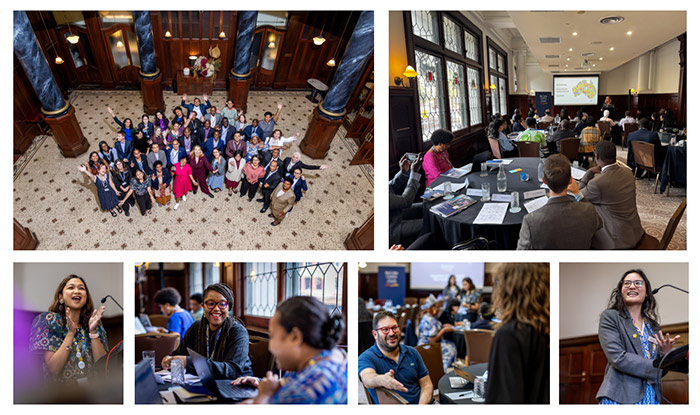
The McCabe Centre was proud to host its first Advanced Workshop on Law and Tobacco Control from 23–27 March 2026 in Melbourne, Australia, marking our return to face-to-face training in Melbourne for the first time since the COVID-19 pandemic.
Funded by the Australian Department of Health, Disability and Ageing, the five‑day workshop brought together more than 40 participants from 20 countries, including 26 lawyers, policymakers, and civil society leaders undertaking advanced training, as well as observers and expert guest speakers.
We were pleased to be joined by representatives from the World Health Organization (WHO), the Secretariat of the Pacific Community (SPC), the World Bank, Cancer Council Victoria, the Australian Department of Health, Disability and Ageing and Department of Foreign Affairs and Trade.
Delivered in collaboration with the WHO and SPC, the program convened legal, policy, tax, and public health experts for in-depth discussions on advancing effective tobacco control through law.
Strengthening Legal Capacity for Tobacco Control
The workshop focused on sharing the latest updates on legal issues in tobacco control and provided alumni of the McCabe Centre’s online training with an opportunity to deepen their legal knowledge while strengthening professional networks.
Participants exchanged information and experiences, engaged in peer learning, and built connections across regions to support ongoing collaboration. Participants were also able to hear directly from Australian government representatives regarding local experiences and WHO experts regarding good practice in tobacco control.
Workshop sessions addressed a wide range of priority issues, including:
- Tobacco industry interference and Article 5.3 of the WHO Framework Convention on Tobacco Control (WHO FCTC)
- Regulation of e-cigarettes and new nicotine products
- Forward‑looking measures under Article 2.1 of the WHO FCTC
- Enforcement of tobacco control and vaping laws and illicit trade
- Recent litigation and legal challenges
- Regulation of cross‑border tobacco advertising, promotion, and sponsorship
These sessions were complemented by practical exercises and discussion-based activities designed to help participants apply legal knowledge to real‑world tobacco control priorities in their own countries.
As a WHO FCTC Knowledge Hub for Legal Challenges, the McCabe Centre’s role is to convene expertise, share evidence‑based practice, and support countries to translate legal and technical knowledge into effective, enforceable policy action.
A Legal Fight as well as a Health One
Throughout the week, participants explored efforts to future‑proof tobacco control laws, approaches to regulating emerging nicotine products and digital spaces, and practical strategies for countering tobacco industry interference.
Discussions reinforced a central theme: tobacco control is not only a public health challenge, but a legal one—and global capacity building is critical to turning good ideas into life‑saving laws.
Over the course of the workshop, participants engaged in hands-on activities, case‑based discussions, and peer learning designed to strengthen national and regional legal capacity.
“We stand together as a global community of allies—united in the fight against Big Tobacco and other unhealthy industries; united by a deeply human shared purpose—to protect our families, communities, and future generations,” said McCabe Centre’s Director Hayley Jones.
The impact of the training extends well beyond the week in Melbourne.
Strengthened legal frameworks and informed policy decisions contribute directly to better health outcomes, reduced tobacco‑related harm, and long‑term societal and economic benefits.
“It was such a privilege to welcome colleagues from across the globe, and to support this important work through collaboration, knowledge sharing, and ongoing support. We look forward to continuing this great work together,” Hayley added.
The next edition of our online course will open in May.
We are seeking funders to help expand our face-to-face training program – please contact us on info@mccabecentre.org, if you would like to discuss partnering with us.