How do we accelerate progress on noncommunicable diseases (NCDs) and mental health when the world is facing climate disruption, geopolitical instability, economic uncertainty, and deepening inequities?
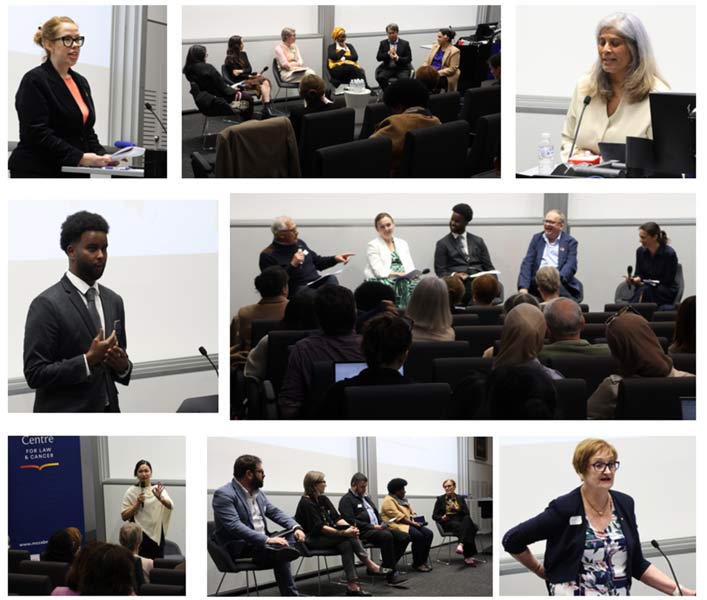
Our new report released today captures the insights and commitments from more than 70 leaders, advocates, researchers, policymakers, young people, and community voices who gathered in Melbourne on 21 November 2025 to tackle this question.
Accelerating progress on NCDs and mental health requires coordinated government leadership and a strong, empowered civil society, supported by research on cost-effective and impactful strategies and strategic philanthropy. Clear roles, sustained financing, and genuine partnership are essential to reduce future health costs, strengthen productivity, and advance equity across Australia and the region.
As emerging public health leader Khalid Muse said, we must also continue to challenge the tendency to reiterate known issues without including lived experience.
“Let’s be real about how influence keeps the system the same – people closest to these hardships are the furthest from the people making change,” Khalid said.
See the full report here.
Hosted at the University of Melbourne, the symposium was jointly organised by the McCabe Centre for Law & Cancer, Cancer Council Victoria, the Australian Global Health Alliance, the Australian Network of WHO Collaborating Centres, and The George Institute for Global Health, with support from the Union for International Cancer Control (UICC) as part of the World Cancer Leaders’ Summit.
Dr Saunthari emphasized, we need to “ move from rhetoric to reality” which requires “ making every dollar go further and every impact stronger.”
A global panel of leaders
Thanks to the exceptional group of global and regional experts that contributed, and a huge thank you to all of our esteemed speakers and panellists:
Dato' Dr Saunthari Somasundaram, National Cancer Society of Malaysia; Dr Cary Adams, Union for International Cancer Control (UICC); Krystal Millar, DFAT; Prof. Rob Moodie, University of Melbourne; Khalid Muse, CALM Youth; Lisa Stevens, International Atomic Energy Agency (IAEA); Shane McArdle MPH, Asbestos and Dust Diseases Research Institute (ADDRI); Evan Bletcher, The World Bank; Margaret Asinimbu, National Department of Health PNG; Dr Selina Namchee Lo, Australian Global Health Alliance; Zainab Shinkafi-Bagudu, UICC; Prof Susan Sawyer, Murdoch Children's Research Institute (MCRI); Laura Downey, The George Institute for Global Health; Delphina Taoa Kerslake, McCabe Centre; Tan Kwang Cheak, Singapore Cancer Society; Prof. Sanchia Aranda AM, VCCC Alliance.
Thanks also to Wurundjeri Man Willy Xiberras welcome to country; Chair: Hayley Jones (McCabe Centre); Moderators: Lucy Westerman (University of Melbourne), Veronica Le Nevez (The George Institute); Ma-Anne Rosales-Sto. Domingo (McCabe Centre).
Their contributions shaped a shared vision for what meaningful, scaled action must look like in the coming years. See speaker bios here.
Why this conversation matters now
NCDs and mental health conditions collectively account for the majority of the global disease burden. But progress has been too slow — and the global landscape is shifting rapidly. Participants emphasised that these challenges cannot be separated from broader forces shaping people’s lives and health: economic policy, climate impacts, gender inequity, governance, and conflict. Against this backdrop, the symposium called for ambition, courage, and more coordinated action.
What’s next?
To maintain momentum following last year’s 4 th UN HLM on NCDs and Mental Health, we invite partners across government, civil society, philanthropy, research, and international organisations to explore the report and consider how these insights, priorities and key recommendations can strengthen collective efforts in Australia, the IndoPacific, and globally.
The Symposium concluded with our Director, Hayley Jones, making a call to “ take that momentum forward, that hope, forward.”